
What the A2 exam really asks.
All 210 questions and tasks from three DUO practice exams were coded individually. Not what the exam is supposed to test: what it does test, counted.
This is DUO practice material
A2 is set by DUO. The Staatsexamen NT2 at B1 and B2 is set by the CvTE. Two different exams from two different bodies, and they behave differently on nearly everything we measured. Everything on this page comes from the official DUO practice exams, with the answer key from the results screen.
Counted from the practice exams DUO publishes at inburgeren.nl.
Reading
75 questions, 3 practice examsThe answer is usually in front of you. More than half the time it is there almost word for word, which is the single biggest difference between A2 and the levels above it.
Reading at A2 rewards finding over interpreting. The traps are spread evenly rather than concentrated: the right fact at the wrong moment (17), something true that does not answer the question (16), and the right fact about the wrong person (15). All three are about precision rather than comprehension. That is why the A2 inburgering practice exam is worth doing under time rather than at your own pace.
In the exam
- Search for the answer rather than reading the text through. In 41 of the 75 questions it is there almost word for word.
- Check who the fact belongs to before you choose. The right fact about the wrong person is a trap 15 times.
- Reject an option that only answers half the question. That is another 12 of the 75.
Listening
75 questions, 3 practice examsAlmost every question asks for one specific detail. Not the gist, not the speaker attitude: a fact you either caught or did not.
Two things follow. Read the question first, every time: the exam always lets you. And hold your answer until the fragment ends, because in a third of the questions the wrong option is something the speaker says and then takes back.
In the exam
- Read the question before the fragment starts. You are allowed to every time, in all 75.
- Wait until the fragment ends before you choose. In 25 of the 75 an option is named and then taken back.
- Listen for one fact rather than the general drift. 68 of the 75 questions want a single detail.
Writing
12 tasks, 3 practice examsTwelve tasks is too few for percentages, so these are counts. What they show is consistency: on some points the exam never varies.
You are never asked for a long text and never asked to open one yourself. What the exam does ask is that you cover the points it lists, and it lists them in ten of the twelve tasks. Missing one of those points is the cheapest mark to lose.
In the exam
- Tick off the points the task lists before you hand it in. Ten of the twelve tasks spell them out.
- Keep it short. All twelve ask for a short text.
- Do not write your own opening. All twelve give you the first line.
How we mark writing
DUO publishes a marking model for speaking but not for writing at A2. These five criteria are the ones our own feedback uses, built to match the structure the CvTE applies one level up.
Scroll the table sideways to see what each criterion measures.
| Criterion | Points | What it measures |
|---|---|---|
| Adequacy | 0 to 3 | Does the text do what the task asked |
| Word use | 0 to 2 | Range and choice of vocabulary |
| Grammar | 0 to 2 | Grammatical accuracy |
| Spelling | 0 to 2 | Spelling of the words you used |
| Coherence | 0 to 1 | Whether the parts hang together |
Spelling is worth a fifth of the total here, which is heavier than it is at B1: the CvTE gives it 4 points of about 47. At A2 the texts are short, so a handful of spelling slips is a larger share of what there is to judge.
This is our model, not an official one. DUO publishes no marking scheme and no pass mark for A2 writing, so both the weighting and any pass rate we show are our own reading of what the exam asks for.
Source: Our own grading model, matched to the CvTE structure used at B1.
Speaking
48 tasks, 3 practice examsThe most predictable part of the exam. Four sections of four questions, and the section tells you what kind of answer it wants before you have read the task.
The section tells you what kind of answer it wants before you have read the task. Every one-picture task asks you to describe, all 12 of them, and every two-picture task asks your opinion. Three pictures is the exception and is not a rule at all: 9 of those 12 ask you to retell and 3 ask you to describe. At B1 that same one-picture section produces seven different kinds of task, so this predictability is an A2 feature rather than how speaking exams work. It also has a limit worth knowing. Almost every task asks two things and marks the second itself with "Vertel ook". Find that second instruction before you start talking. That habit takes repetition to build, which is what the inburgering exam A2 course is for.
In the exam
- Find the second instruction before you start talking, usually "Vertel ook". 46 of the 48 tasks ask for two things.
- Look at how many pictures there are before you plan the answer. One means describe, in all 12 of the one-picture tasks; two means give an opinion, in all 12 of those. Three pictures does not settle it.
- Keep going if you have an accent. The points go to whether people understand you, not to sounding Dutch.
How speaking is marked
DUO publishes the marking model for A2 speaking, and it is more specific than most candidates expect. Six criteria, twelve points per task.
Scroll the table sideways to see what each criterion measures.
| Criterion | Points | What it measures |
|---|---|---|
| Adequacy | 0 to 3 | Does it answer the question that was asked |
| Word use | 0 to 2 | Range and choice of vocabulary |
| Grammar | 0 to 2 | Grammatical accuracy |
| Fluency | 0 to 2 | How much you hesitate |
| Pronunciation | 0 to 2 | Whether you can be understood |
| Coherence | 0 to 1 | Whether the parts hang together |
Adequacy carries the rule worth knowing: score zero there and every other criterion is set to zero as well. An answer beside the question scores nothing for that task, however good the Dutch.
We score four of these six. Fluency and pronunciation we leave out, because our feedback works from a transcript and both disappear the moment speech becomes text. They are worth 4 of the 12 points, and they are the two that need a human listener.
An accent does not cost you points
The highest points for pronunciation go to speech that an untrained listener understands without effort, and the model says this holds despite an accent or the occasional mispronounced word. What is measured is whether you are understood, not whether you sound Dutch.
One figure here is not DUO’s: where the pass mark sits. The model gives the criteria and the points but publishes no cut-off. Any pass rate is therefore our estimate, and we label it as one.
Source: Beoordelingsmodel Spreekvaardigheid A2, DUO, version 31 March 2023.
How A2 differs from B1
Both were coded the same way, so the two can be compared. These three differences were tested and are large enough to be real.
Reading: answer stands almost literally in the text
41 of 75 against 20 of 105
Listening: answer is said almost literally
56 of 75 against 17 of 114
Listening: question asks for one specific detail
68 of 75 against 92 of 115
One caution, and it is ours rather than a hedge. A2 is a DUO exam and B1 is the Staatsexamen NT2, so part of what separates them is that different people write them. The gap is real; calling all of it a difference in level would not be.
One thing to keep in mind
The three speaking practice exams look like a single batch: identical section wording, and the same typo in all three. So those figures describe the DUO practice exams we counted, not every A2 exam ever set. Reading, listening and writing come from the same three exams and carry the same caution. We publish what we counted and what it rests on, which is also how inburgeringscursus is built.
How this was counted
Every question in the three practice exams was coded on what it asks, how the wrong answers are built, and what the right one looks like. A question too unclear to categorise was left out rather than forced into a box. The same caution is why the patterns that fell apart under checking are published on the Dutch exam research page rather than quietly dropped.
Counted August 2026, from the practice exams available then.
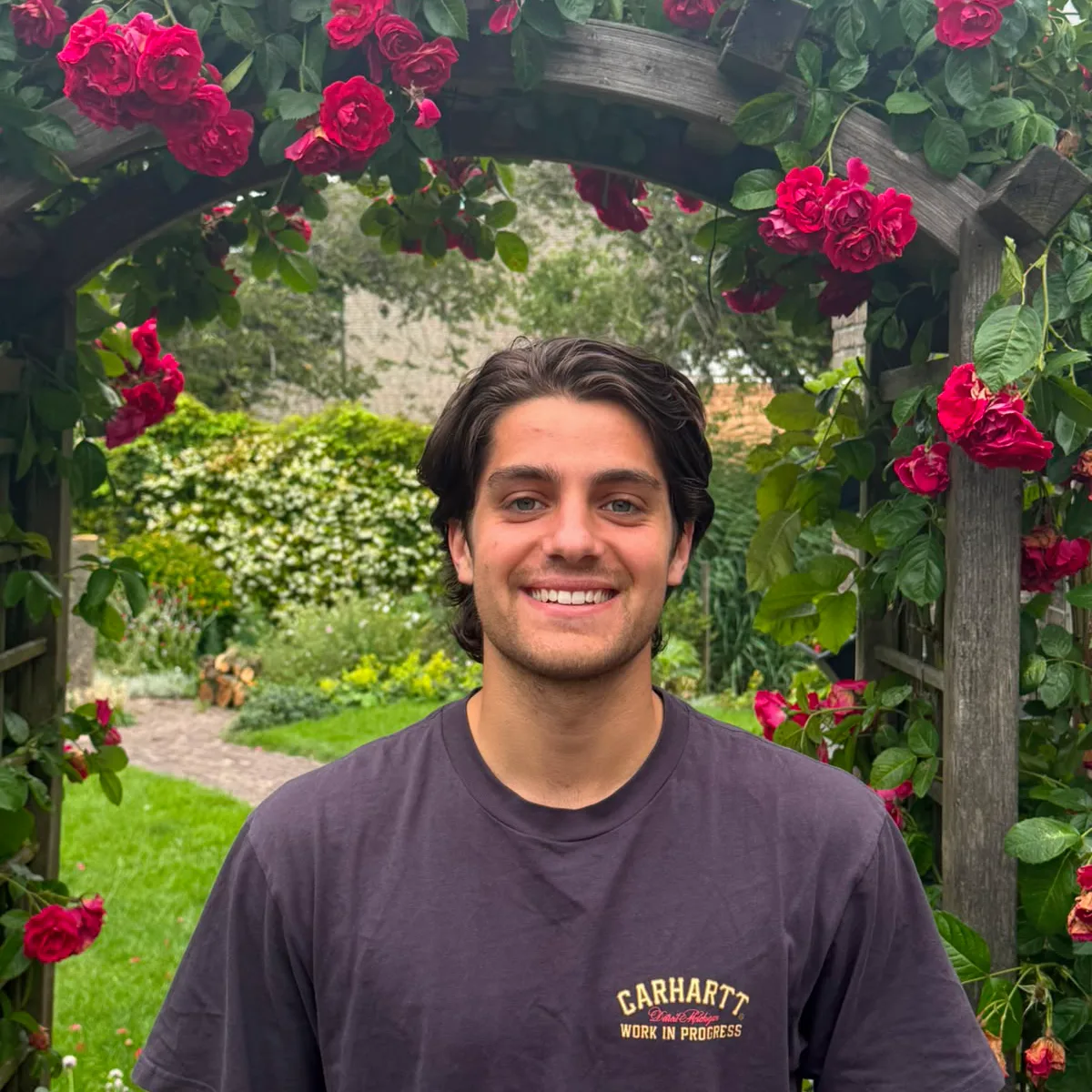
Timo Yasamin · Founder, Inburgeringscursus
Timo started Inburgeringscursus after watching people prepare for this exam with material nobody had checked against the real thing. So he had it checked. Every figure on these pages is counted from the official exams, and the patterns that did not survive that check are published next to the ones that did.
Practise the A2 exam
part by part.
One full practice exam per part, free, in the format the real one uses.