
What the B1 exam really asks.
Three years of the Staatsexamen NT2, coded item by item. Where A2 mostly asks you to find things, B1 asks you to work them out, and the numbers show exactly where that shift happens.
This is the Staatsexamen NT2
B1 is Programma I of the Staatsexamen NT2, set by the CvTE, and it is a different exam from the one you sit at A2. The CvTE publishes its exams and its marking models, which is why this page can tell you not just what the questions look like but exactly how many points each part of your answer is worth.
Counted from the exams the CvTE publishes in its NT2 practice environment.
Reading
105 questions, 3 exams (2023 to 2025)The answer is rarely there in the words you read. Two thirds of the time it has been rewritten, so recognising a phrase from the text is not the same as having found the answer.
The dominant trap is not a false statement. It is a true one that answers a question you were not asked, and it accounts for 39 of the 105 items. Ruling out on "that is not in the text" barely helps here, because most wrong options are in the text. The B1 inburgering practice exam is where that habit gets built.
In the exam
- Reject an option because it answers the wrong question rather than because it is untrue. That trap appears 39 times in 105.
- Expect the answer to be reworded. Only 20 of the 105 stand there almost literally.
- Read the question before you decide what the paragraph is about. 61 of the 105 want one specific detail, not the gist.
Listening
115 questions, 3 exams (2023 to 2025)Three quarters of the answers are paraphrased, and almost every fragment is a conversation between two people. You are listening for what someone meant, not for a phrase to match.
The set-up before each fragment tells you less than you would hope. In 71 of the 115 it names neither the subject nor the direction the answer takes, so there is no shortcut: you have to follow the conversation itself.
In the exam
- Listen for meaning rather than for a matching phrase. In 86 of the 114 the answer has been reworded.
- Track who says what. 105 of the 115 fragments have two speakers, and mixing them up is a trap in its own right.
- Do not lean on the introduction. In 71 of the 115 it gives away nothing about where the answer lies.
Writing
36 tasks, 3 exams (2023 to 2025)Twelve tasks per exam, eight short and four long. Two thirds are an email, and in two thirds of them the exam does not list what to cover: you have to work out what the situation needs.
This is the biggest change from A2. There, ten of the twelve tasks spelled out the points to cover; here, 24 of the 36 leave that to you. Working out what a situation asks for has become part of what is being tested.
In the exam
- Work out what the situation needs before you write. In 24 of the 36 tasks the points are not listed for you.
- Match the register to the reader. Informal is the largest group at 17 of 36, so formal Dutch is not the safe default it looks like.
- Practise email above anything else. It is 23 of the 36 tasks, and work or education is the setting in 29.
How writing is marked
The CvTE publishes the model, and it is worth reading once before you practise. Twelve tasks, 47 to 48 points, and they are not spread the way most candidates expect.
Scroll the table sideways to see what each criterion measures.
| Criterion | Points | What it measures |
|---|---|---|
| Adequacy | 20 | Does the text do what the task asked, for the right reader |
| Grammar | 16 | Grammatical accuracy |
| Word use | 4 | Range and choice of vocabulary |
| Spelling | 4 | Spelling of the words you used |
| Coherence | 3 or 4 | Whether the parts hang together |
Adequacy alone is 20 of the 47, so nearly half your mark rides on whether the text does what the task asked. Grammar is 16. Everything else together is under a quarter.
Spelling is worth almost nothing
Four points of about 47, under a tenth of your mark. The fear of spelling mistakes is out of all proportion to what they cost, and the time it takes to check them is usually better spent making sure you covered every point the task asked for.
Unlike A2, this exam does publish a pass mark: 25 to 26 of the 47 to 48 points, depending on the year. That is the CvTE figure and not an estimate of ours.
Source: CvTE marking models, Schrijven I, 2023 to 2025.
Speaking
48 tasks, 3 exams (2023 to 2025)Sixteen tasks, split evenly between two parts, and half of them start with you listening to someone else. Nothing about the shape tells you what kind of answer is wanted.
Where A2 is a template, B1 is not. The same one-picture set-up produces seven different kinds of task here, so counting the pictures tells you nothing. What does tell you something is the instruction: read it for how many things it asks and whether it wants a reason. That is a habit rather than a fact, which is what the Staatsexamen NT2 Programma 1 course is built to drill.
In the exam
- Read the instruction for what it asks rather than guessing from the picture. One picture leads to seven different task types at this level.
- Check whether a reason is wanted. It is in 22 of the 48 tasks, and leaving it out costs points on the heaviest criterion.
- Be ready to answer a person rather than a prompt. Half the tasks start with someone speaking, and in 12 of the 48 you reply to them directly.
How speaking is marked
Six aspects, 128 points across sixteen tasks. Two of them cannot be judged from a transcript, which matters for how you practise.
Scroll the table sideways to see what each criterion measures.
| Aspect | Points | What it measures |
|---|---|---|
| Content | 32 | Whether you said what the task asked for |
| Word and sentence formation | 32 | Grammatical accuracy |
| Vocabulary | 24 | Range and choice of words |
| Pronunciation | 24 | Whether you can be understood |
| Tempo | 8 | Pace and hesitation |
| Word choice | 8 | Whether the words fit the situation |
Content and grammar are 64 of the 128 between them, so half your mark is what you said and how correctly you said it.
Pronunciation and tempo are 32 of the 128, a quarter of the total, and neither survives becoming a transcript. Our own feedback therefore reaches about three quarters of what a real assessor weighs, and we would rather say so than let a score here read as an exam prediction.
The pass mark is published for this exam, and the exam was rebuilt in 2024: 58 of 115 points in 2023, then 73 and 75 of 128 in 2024 and 2025. Those are CvTE figures, not ours.
Source: CvTE marking models, Spreken I, 2023 to 2025.
How B1 differs from A2
Both were coded the same way, so the two can be compared. These are the differences that were tested and came out large enough to be real.
Reading: answer stands almost literally in the text
41 of 75 against 20 of 105
Listening: answer is said almost literally
56 of 75 against 17 of 114
Writing: task lists the points to cover
10 of 12 against 12 of 36
One caution, and it is ours rather than a hedge. A2 is a DUO exam and B1 is the Staatsexamen NT2, so part of what separates them is that different people write them. The gap is real; calling all of it a difference in level would not be.
One thing to keep in mind
These are three consecutive years of one exam, not a sample of every paper the CvTE has ever set. Where a field was too uncertain to code, the item was left out rather than guessed, which is why some counts run to 112 or 114 rather than the full 115. We publish what we counted and what it rests on, which is also how inburgeringscursus is built.
How this was counted
Every question in three years of exams was coded on what it asks, how the wrong answers are built, and what the right one looks like. A question too unclear to categorise was left out rather than forced into a box, which is why some counts here run to 112 or 114 instead of the full 115. The same caution is why the patterns that fell apart under checking are published on the Dutch exam research page rather than quietly dropped.
Counted August 2026, covering the 2023, 2024 and 2025 exams.
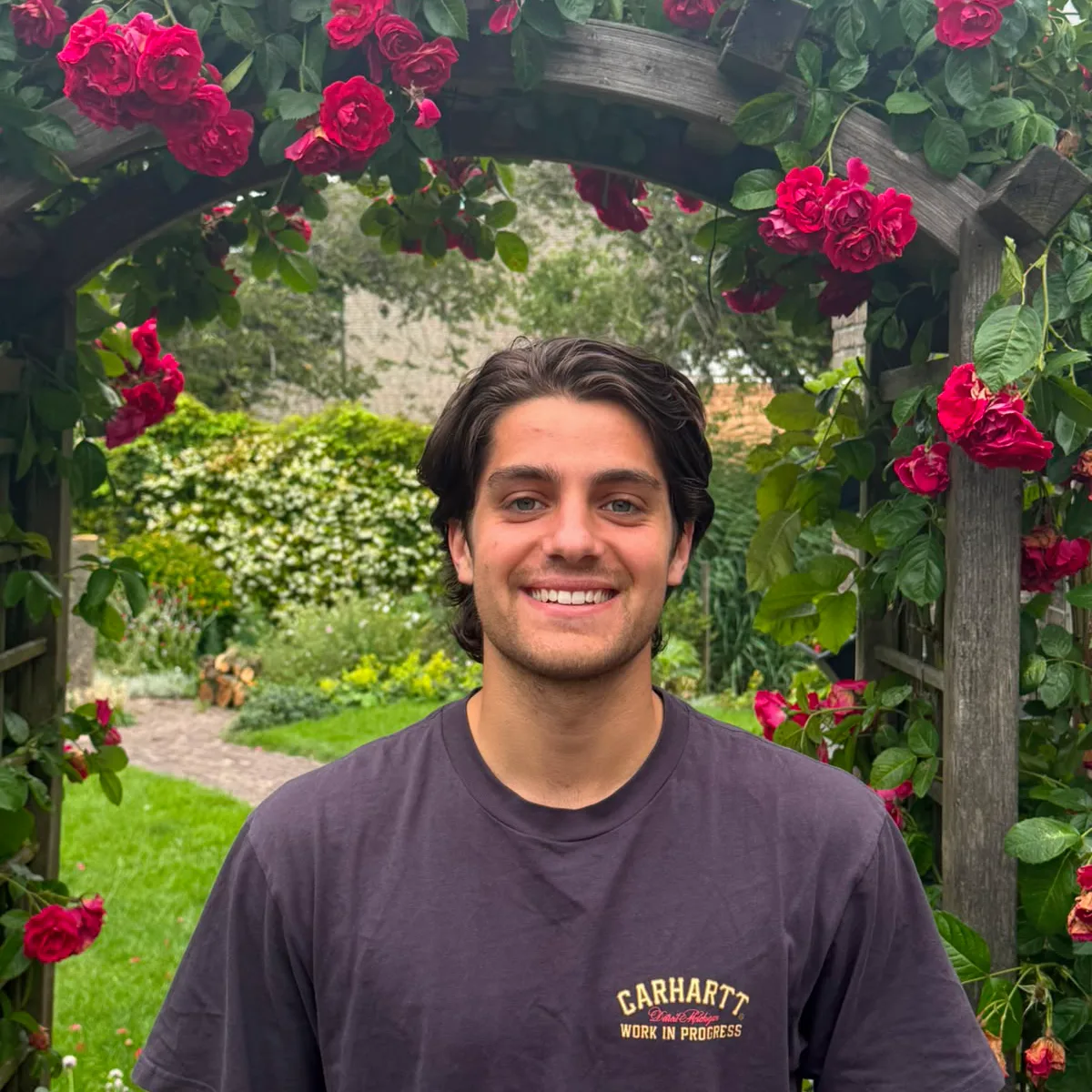
Timo Yasamin · Founder, Inburgeringscursus
Timo started Inburgeringscursus after watching people prepare for this exam with material nobody had checked against the real thing. So he had it checked. Every figure on these pages is counted from the official exams, and the patterns that did not survive that check are published next to the ones that did.
Practise the B1 exam
the way it is set.
One full practice exam per part, free, in the format the real one uses.